
We’re going to start publishing the occasional book review on the peaceCENTER’s Web site. This is the first:
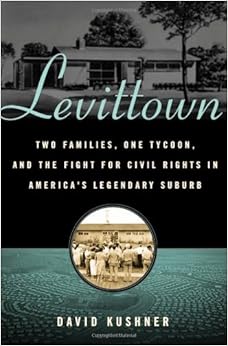 Read this book: “Levittown: two families, one tycoon, and the fight for civil rights in America’s legendary suburb” by David Kushner (Walker & Co., 2009)
In the fall of 1957, as the eyes of the nation were focused on Little Rock High School, another integration drama was playing out up North, in Levittown Pennsylvania. Bill and Daisy Myers bought a house. It shouldn’t have been a big deal. Since 1952, when the Levitt brothers started building affordable postwar homes in the spinach fields in rural Bucks County, 17,311 families had moved in. The Myers new home, on Deepgreen lane, was exactly 12.5 miles east of the Philadelphia suburb my family moved to just two years before. We were greeted with a cake and a smile. Their welcome was a rock through the window and a burning cross on the front yard.
Although the US Supreme Court found housing segregation to be illegal in 1917, it continued. Indeed, during the Depression, New Deal policies encouraged separation of the races. Banks were penalized for lending money to African-Americans trying to buy homes in predominately white neighborhoods; real estate agents wouldn’t even show these homes to them. In their first planned development, on Long Island, and in this new Pennsylvania suburb, the Levitts advertised their neighborhoods as all-white.
The Myers were not activists. They said, over and over, that they just wanted a nice home for themselves and their three children, like everyone else in Levittown. “With a garage,” Bill, an engineer, always added. He wanted a place to tinker. A coalition of neighbors, many of the descendants of the original Quaker settlers brought over by William Penn (whose estate, Pennsbury, is just six miles east of Deepgreen Lane) helped the Myers find and purchase their American dream house.
Even before they moved in, a mob – more than 350 people – surrounded the house and shouted racist obscenities. They received bomb and death threats. Their next-door neighbors had “KKK” spray painted on their garage door. Several crosses were burned in front yards. For three months, sympathetic neighbors moved into their kitchen at night to help keep them safe. Police guarded the outside; one State Trooper was knocked out by a rock thrown by the mob.
The agitators rented a house right in back of the Myers. They called it “the clubhouse,” and flew the confederate flag over it, banged pots and pans at night to keep them awake and played loud music 24/7. The Levittown Shop-a-Rama did a landmark business selling confederate flags. This is the North. My people are Yankees. These flags were in no way symbols of “southern pride.” These flags were racist symbols.
The State eventually moved in and dragged the protestors to court. It blew over. But not really. Today, the African-American population of Levittown is only 3.6% (compared to 44.2% in adjacent Philadelphia): a lingering artifact of the racial violence 58 years ago. Learn more about this fascinating incident in the video below. And read the book!

