
PEOPLE WITH A
PASSION FOR PEACE
Since 1995, the all-volunteer and interfaith peaceCENTER continues to be a significant community catalyst for peace in San Antonio, Texas. Compassion and Justice are our strong guiding lights. Contemplative Practices, Experiential Education, and Nonviolent Actions are our working expressions throughout the community at large.
285 Oblate Drive
San Antonio, Texas 78216
The peaceCENTER is a 501(c)((3)) non-profit

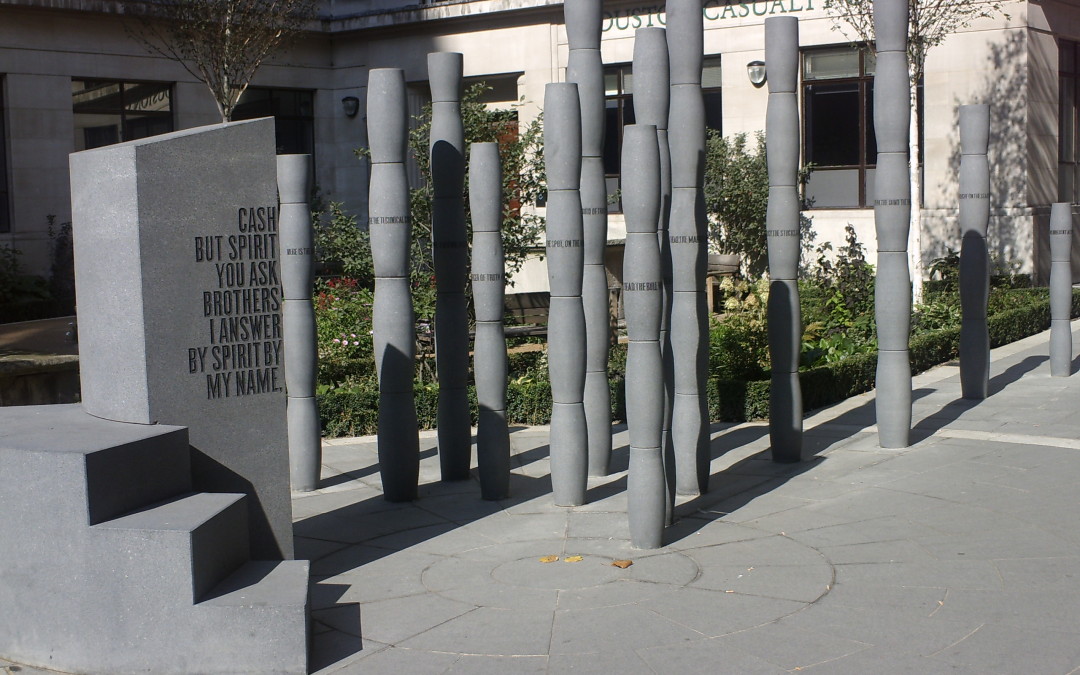
Monday’s Monument: The Gilt of Cain, City of London
This powerful sculpture commemorates the abolition of the transatlantic slave trade in 1807, which began the process of the emancipation of slaves throughout the British Empire. Fen Court in the City of London is the site of a churchyard with a strong historical connection to the abolitionist movement of the 18th and 19th centuries. The Rev John Newton, a slave-trader turned preacher and abolitionist (he’s the one who wrote “Amazing Grace”), was rector from 1780 – 1807. Newton worked closely alongside the famous abolitionist William Wilberforce.
The granite sculpture is composed of a group of columns surrounding a podium. The podium calls to mind a church pulpit or slave auctioneer’s block; the columns evoke stems of sugar cane and are positioned to suggest an anonymous crowd or congregation gathered to listen to a speaker. Extracts from Lemn Sissay’s poem, ‘Gilt of Cain’, are engraved into the granite. The poem weaves the coded language of the City’s stock exchange trading floor with biblical Old Testament references. The monument was unveiled by Archbishop Desmond Tutu in 2007 on the 200th anniversary of the abolition of the slave trade. read more…
We are only maintaining the calendar at our Compassionate San Antonio site now.
2018 PEACE LAUREATES
