
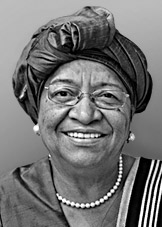
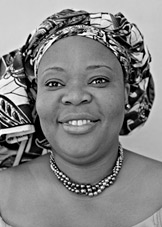

The 2011 Nobel Peace Prize was awarded to Ellen Johnson Sirleaf and Leymah Gbowee, of Liberia, and to Tawakkul Karman, of Yemen, for their non-violent struggle for the safety of women and for women’s rights to full participation in peace-building work.
In her Nobel lecture Tawakkul Karman said, “Many nations, including the Arab peoples, have suffered, although they were not at war, but were not at peace either. The peace in which they lived is a false ‘peace of graves’, the peace of submission to tyranny and corruption that impoverishes people and kills their hope for a better future. Today, all of the human community should stand with our people in their peaceful struggle for freedom, dignity and democracy, now that our people have decided to break out of silence and strive to live and realize the meaning of the immortal phrase of Caliph Omar ibn al-Khattab, Since when have you enslaved people, when their mothers had given birth to them as free ones.”
Leymah Gbowee said, ” [This prize] has come at a time when in many societies where women used to be the silent victims and objects of men’s powers, women are throwing down the walls of repressive traditions with the invincible power of non-violence. Women are using their broken bodies from hunger, poverty, desperation and destitution to stare down the barrel of the gun. This prize has come at a time when ordinary mothers are no longer begging for peace, but demanding peace, justice, equality and inclusion in political decision-making.”
And President Sirleaf said: “Today, across the globe, women, and also men, from all walks of life are finding the courage to say, loudly and firmly, in a thousand languages, “No more.” They reject mindless violence, and defend the fundamental values of democracy, of open society, of freedom, and of peace.”
The Nobel Peace Prize is one of the five Nobel Prizes created by the Swedish industrialist, inventor, and armaments manufacturer Alfred Nobel. Since 1901 it has been awarded annually (with some exceptions) to those who have “done the most or the best work for fraternity between nations, for the abolition or reduction of standing armies and for the holding and promotion of peace congresses” Over the next few months we’ll be introducing you to the past Nobel laureates, leading up to the award of the 2016 prize in October.

