
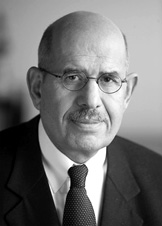
The 2005 Nobel Peace Prize was awarded to International Atomic Energy Agency, part of the United Nations and to its Director General, Mohamed ElBaradei, of Egypt, for their efforts to prevent nuclear energy from being used for military purposes and to ensure that nuclear energy for peaceful purposes is used in the safest possible way. In his Nobel lecture ElBaradei said: “Some would say that it is too idealistic to believe in a society based on tolerance and the sanctity of human life, where borders, nationalities and ideologies are of marginal importance. To those I say, this is not idealism, but rather realism, because history has taught us that war rarely resolves our differences. Force does not heal old wounds; it opens new ones.”
The Nobel Peace Prize is one of the five Nobel Prizes created by the Swedish industrialist, inventor, and armaments manufacturer Alfred Nobel. Since 1901 it has been awarded annually (with some exceptions) to those who have “done the most or the best work for fraternity between nations, for the abolition or reduction of standing armies and for the holding and promotion of peace congresses” Over the next few months we’ll be introducing you to the past Nobel laureates, leading up to the award of the 2016 prize in October.

