
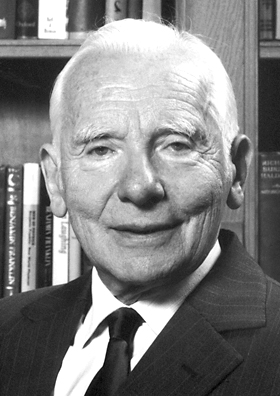
The 1995 Nobel Peace Prize was awarded to Joseph Rotblat, of the United Kingdom, and to the Pugwash Conferences on Science and World Affairs, founded in Canada, for their efforts to diminish the part played by nuclear arms in international politics and, in the longer run, to eliminate such arms. The Pugwash Conferences take their name from the fishing village of Pugwash, Nova Scotia, site of the first meeting in 1957 which was attended by 22 eminent scientists, inspired by the “Manifesto” issued in 1955 by Bertrand Russell and Albert Einstein, which called upon scientists of all political persuasions to assemble to discuss the threat posed to civilization by the advent of thermonuclear weapons. Rotblat said in his Nobel lecture: “At a time when science plays such a powerful role in the life of society, when the destiny of the whole of mankind may hinge on the results of scientific research, it is incumbent on all scientists to be fully conscious of that role, and conduct themselves accordingly. I appeal to my fellow scientists to remember their responsibility to humanity.”
The Nobel Peace Prize is one of the five Nobel Prizes created by the Swedish industrialist, inventor, and armaments manufacturer Alfred Nobel. Since 1901 it has been awarded annually (with some exceptions) to those who have “done the most or the best work for fraternity between nations, for the abolition or reduction of standing armies and for the holding and promotion of peace congresses” Over the next few months we’ll be introducing you to the past Nobel laureates, leading up to the award of the 2016 prize in October.

