
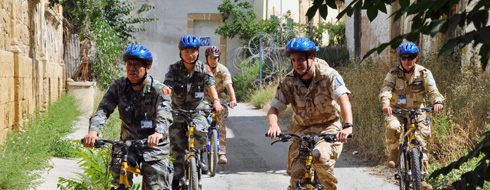
The 1988 Nobel Peace Prize was awarded to the United Nations Peace-Keeping Forces for their efforts that have made important contributions towards the realization of one of the fundamental tenets of the United Nations. There are currently 16 UN Peace-keeping missions: Western Sahara; Central African Republic; Mali; Haiti; Democratic Republic of the Congo; Darfur; Golan (Israel/Syria border); Cyprus; Lebanon; Abyei (Sudan); Kosovo; Liberia; South Sudan; India and Pakistan; Côte d’Ivoire; and the Middle East (based in Jerusalem since 1948.) The picture above is of a bicycle patrol in Cyprus; UN peace-keepers have been there since 1964.
The Nobel Peace Prize is one of the five Nobel Prizes created by the Swedish industrialist, inventor, and armaments manufacturer Alfred Nobel. Since 1901 it has been awarded annually (with some exceptions) to those who have “done the most or the best work for fraternity between nations, for the abolition or reduction of standing armies and for the holding and promotion of peace congresses” Over the next few months we’ll be introducing you to the past Nobel laureates, leading up to the award of the 2016 prize in October.

