
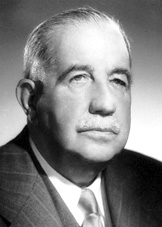
The 1951 Nobel Peace Prize was awarded to Léon Jouhaux, of France, President of the International Committee of the European Council, vice president of the International Confederation of Free Trade Unions, vice president of the World Federation of Trade Unions, member of the ILO (International Labor Office) Council, and delegate to the United Nations. When presenting him with the prize, Gunnar Jahn, Chairman of the Nobel Committee remarked: “His whole life reveals a man who has never faltered in the fight to attain the goal which he set himself in his youth: to lay the foundations of a world which could belong to all men alike, a world where peace would prevail. He has realized that such a world can never become a reality unless its society is based on social justice and democracy.”
The Nobel Peace Prize is one of the five Nobel Prizes created by the Swedish industrialist, inventor, and armaments manufacturer Alfred Nobel. Since 1901 it has been awarded annually (with some exceptions) to those who have “done the most or the best work for fraternity between nations, for the abolition or reduction of standing armies and for the holding and promotion of peace congresses” Over the next few months we’ll be introducing you to the past Nobel laureates, leading up to the award of the 2016 prize in October.

