
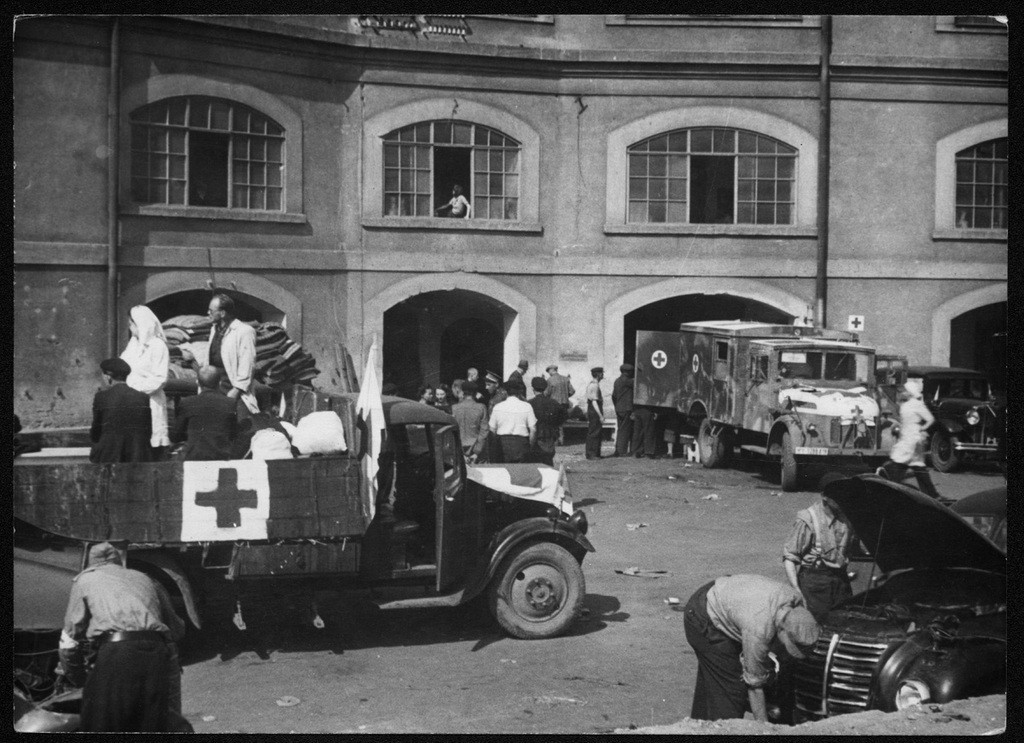
The 1944 Nobel Peace Prize was again awarded to the International Committee of the Red Cross, for “the great work it has performed during the war in behalf of humanity.” On 8 May 1945, an Allied military mission arrived in Oslo to deliver the conditions for capitulation to the Germans, and arranged the surrender, which took effect at midnight. A provisional government was formed and by the end of June a new Nobel Committee was formed. In November, 1945, the Prize was retroactively awarded to the Red Cross.
The Nobel Peace Prize is one of the five Nobel Prizes created by the Swedish industrialist, inventor, and armaments manufacturer Alfred Nobel. Since 1901 it has been awarded annually (with some exceptions) to those who have “done the most or the best work for fraternity between nations, for the abolition or reduction of standing armies and for the holding and promotion of peace congresses” Over the next few months we’ll be introducing you to the past Nobel laureates, leading up to the award of the 2016 prize in October.

