
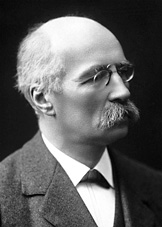
The 1913 Nobel Peace Prize was awarded to Henri La Fontaine, of Belgium, for his work as head of the International Peace Bureau. He served as its president from 1907 until his death in 1943. La Fontaine, a socialist, lawyer and mountaineer, was to spend the World War I years in exile in Washington, DC. From there he despaired for peace, writing to a friend, “I foresee the renewal of…the secret bargaining behind closed doors. Peoples will be as before, the sheep sent to the slaughterhouses or to the meadows as it pleases the shepherds. International institutions ought to be, as the national ones in democratic countries, established by the peoples and for the peoples.”
The Nobel Peace Prize is one of the five Nobel Prizes created by the Swedish industrialist, inventor, and armaments manufacturer Alfred Nobel. Since 1901 it has been awarded annually (with some exceptions) to those who have “done the most or the best work for fraternity between nations, for the abolition or reduction of standing armies and for the holding and promotion of peace congresses” Over the next few months we’ll be introducing you to the past Nobel laureates, leading up to the award of the 2016 prize in October.

