
May 16, 1927
 In the case of Whitney v. California, Justice Louis Brandeis, in his concurrence, offered one of the most eloquent defenses of free speech and established the “clear and present danger” test. Anita Whitney was convicted under California’s 1919 Criminal Syndicalism Act for allegedly helping to establish the Communist Labor Party of America, a group the state charged was devoted to teaching the violent overthrow of government. Whitney claimed that it had not been her intention, nor that of other organizers, that the party become an instrument of violence.
“Those w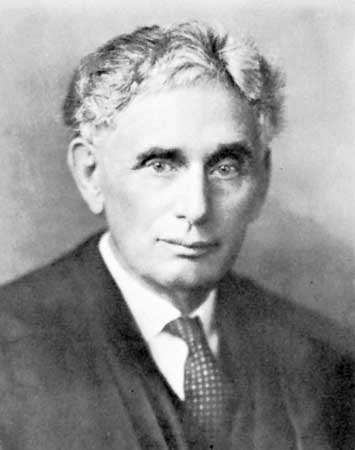 ho won our independence believed that the final end of the State was to make men free to develop their faculties, and that, in its government, the deliberative forces should prevail over the arbitrary . . . They believed that freedom to think as you will and to speak as you think are means indispensable to the discovery and spread of political truth . . . that the greatest menace to freedom is an inert people; that public discussion is a political duty, and that this should be a fundamental principle of the American government. Fear of serious injury cannot alone justify suppression of free speech and assembly. Men feared witches and burnt women. It is the function of speech to free men from the bondage of irrational fears. To justify suppression of free speech, there must be reasonable ground to fear that serious evil will result if free speech is practiced. There must be reasonable ground to believe that the danger apprehended is imminent. There must be reasonable ground to believe that the evil to be prevented is a serious one.”

