Guest Columnist: Cary Clack
It’s a coincidence of the calendar but there’s a date which for the past 70 years rings with piercing familiarity in four transformative events in African-American history, which is to say, American history.
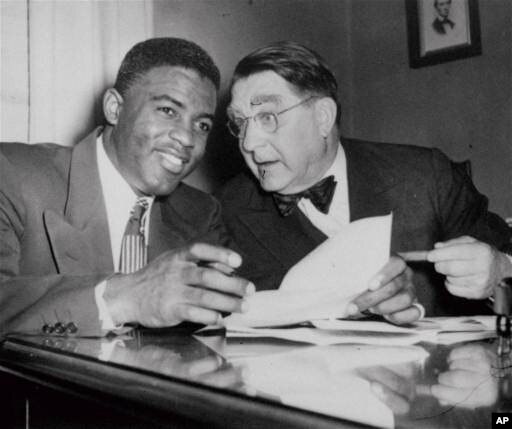 It begins with a meeting that launched the most significant of American athletic careers. On Aug. 28, 1945 Brooklyn Dodgers’ president Branch Rickey welcomed Jackie Robinson into his office. He told the shortstop of the Negro League’s Kansas City Monarchs that he’d chosen him to break major league baseball’s color line.
Warning Robinson of the vicious treatment he’d encounter, Rickey unleashed a plume of racist invective and role played various scenarios which could provoke Robinson into physically retaliating and setting back integration of the national pastime. When Robinson asked if he wanted a player who was afraid to fight back, Rickey answered that he wanted a player with the guts to not fight back.
Nearly 8,000 miles away in India, Mohandas “Mahatma” Gandhi was perfecting the nonviolence resistance he’d unveiled decades earlier in South Africa. It would be the guiding philosophy of the American Civil Rights Movement in which role-playing in anticipation of physical attack would be part of the training.
The advent of the movement was a decade away but in a baseball executive’s office during the summer of 1945, Rickey—nicknamed “Mahatma”—was helping Robinson to understand that the dismantling of baseball’s color line would be through nonviolence.
Robinson’s taking the field on Opening Day of 1947 is one of our milestones towards racial equality. But the date on which it began, Aug. 28, when he met Rickey would echo forward in other moments of historical import.
Beginning with Robinson, Aug.28 would thread its way through the lives of four African-American males whose fates would be inextricably tied to that of their nation. American history can’t be told without their stories. For them, with one horrible exception, Aug.28 was a triumphant and life-defining date for then and the United States.
 The horrible exception was Emmett Till, a 14-year-old whose life would end on Aug. 28, 1955, ten years to the day of Robinson’s meeting with Rickey. A few days earlier, Till, visiting Money, MS from Chicago, supposedly whistled at a white woman in a grocery store. For that “indiscretion” he was kidnapped, tortured and shot before being thrown into the Tallahatchie River with a cotton gin tied around his neck.
When Till’s battered corpse was sent home to Chicago, his mother opened the casket for the world to see what had been done to her child. Those gruesome pictures, the murder itself,and the five-day trial in September which acquitted the two defendants, drew the nation’s attention and had an enduring impact on African-Americans.
Later that year, on Dec. 1,1955 in Montgomery, Ala. Rosa Parks refused to relinquish her seat to a white man. She’d later say that as she sat defiantly on that bus, she thought about Emmett Till. Her arrest ignited the Montgomery Bus Boycott which pushed onto the world stage a young minister named Martin Luther King Jr.
 On Aug. 28, 1963 at the March on Washington for Jobs and Freedom, King delivered his, “I Have a Dream”speech. Jackie Robinson and his family were among the 250,000 in attendance.Earlier that year, the campaign in Birmingham to desegregate public facilities had yielded iconic photos of police dogs and fire hoses unleashed on nonviolent protestors. Including children. Less than three weeks after the March, four girls would be murdered with the bombing of Birmingham’s Sixteenth Street Baptist Church.
But the next two summers would bring the Civil Rights Act of 1964 and the 1965 Voting Rights Act, the two most important fruits of the Civil Rights Movement. These bills helped Barack Obama, from Emmett Till’s hometown of Chicago, walk onto the stage of an outdoor Denver stadium on Aug. 28, 2008 and become the first African-American to accept the presidential nomination of one of the two major political parties. In his speech, Obama acknowledged the 45th anniversary of King’s “I Have a Dream” speech.
Jackie, Emmett, Martin,Barack. The arc of Aug. 28 encompassing their lifetimes isn’t long. But in the United States it’s an arc bending towards historic change.